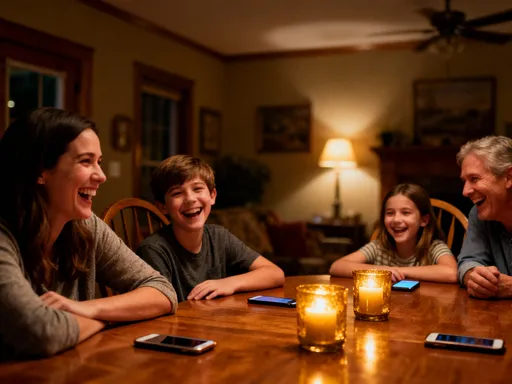
Tired of guessing who’s at the door? This simple system brought peace to our home
Living in a world where doorbells ring at unexpected times, and unfamiliar faces show up unannounced, I used to feel a constant hum of low-level anxiety. Who is it? Are they safe? Should I answer? One afternoon, my child asked, “Mom, why do you always check the peephole twice?” That question hit me hard. It wasn’t just about security—it was about peace. Then we installed a visitor management system, not as a high-tech fix, but as a daily tool that quietly organizes our lives, calms our nerves, and keeps our family feeling safe, every single day.
The Everyday Anxiety No One Talks About
Let’s be honest—how many times have you frozen when the doorbell rang? You’re in the middle of dinner, helping a child with homework, or just stepping out of the shower, and suddenly, there’s a chime. Your heart jumps. You wipe your hands, peer through the peephole, or maybe don’t even answer at all. I used to think this was just part of adulting. But over time, I realized it wasn’t just inconvenient—it was quietly wearing me down.
For families, that moment carries extra weight. If your kids are home alone, even for an hour after school, the idea of strangers at the door becomes more than just a nuisance—it feels dangerous. And if you care for an aging parent or have someone with limited mobility living with you, the stakes feel even higher. What if someone tries to pressure their way in? What if a delivery person leaves a package in the rain, and no one knows until it’s too late?
These aren’t rare, dramatic scenarios. They’re everyday moments that chip away at our sense of control. We lock our doors, yes, but locks don’t tell us who’s out there. They don’t help us decide whether to answer. They don’t ease the tension in our shoulders when we hear footsteps on the porch. I started to wonder: why do we accept this low-grade stress as normal? Why do we treat peace of mind like it’s something we earn only after the kids are grown, the house is paid off, and life finally slows down?
The truth is, safety isn’t just about preventing the worst. It’s about feeling steady in your own home. It’s about knowing you can move through your day without jumping at every sound. And for me, that realization was the first step toward change.
From Chaos to Calm: How a Simple Tech Shift Changed Everything
It wasn’t a break-in or a scary encounter that pushed me to act. It was a package—one that showed up at 7 p.m. on a Tuesday, left at the edge of our porch, half-covered by a grocery bag someone had forgotten to bring in. I didn’t see it until the next morning. When I checked the delivery app, it said “delivered with photo.” But the photo was blurry, taken from too far away. I couldn’t tell if it was actually on our property or just tossed near the sidewalk.
That’s when it hit me: I had no real record of who came to my door. No way to confirm deliveries, no way to know if someone had been lingering. I started asking around—friends, neighbors, other moms at school pickup. And I was surprised how many of them had stories. Packages stolen. Strangers asking for someone who didn’t live there. One friend even had someone pretend to be a utility worker, trying to get inside while her kids were home.
That’s when I started looking into visitor management systems. I’ll admit, I was skeptical. Was this just another gadget? Another thing to charge, set up, and eventually ignore? I didn’t want something flashy. I didn’t need a camera with facial recognition or a speaker that talked back in a robot voice. I just wanted to know who was there—without having to open the door.
What changed my mind was how simple it was. We picked a system that connected to our existing Wi-Fi and synced with our phones. The camera mounted right where our old doorbell was. No rewiring. No electrician. My husband and I set it up in under 20 minutes, following the app instructions. And the very first time it rang while I was upstairs folding laundry, I saw the delivery driver on my phone screen. Clear. Real. No guessing.
That small moment made a big difference. For the first time, I didn’t have to run downstairs or shout through the door. I didn’t have to wonder if it was safe. I could see. And seeing brought calm. It wasn’t about fear—it was about clarity.
More Than a Doorbell: A Tool for Daily Life Organization
Here’s something I didn’t expect: this system didn’t just help with security. It became part of how we organize our lives. Think about how many people come and go in a week—deliveries, guests, caregivers, repair people. Without a way to track them, it’s easy to lose track. Did the plumber already come? Is Grandma arriving today or tomorrow? Did the kids let the dog walker in?
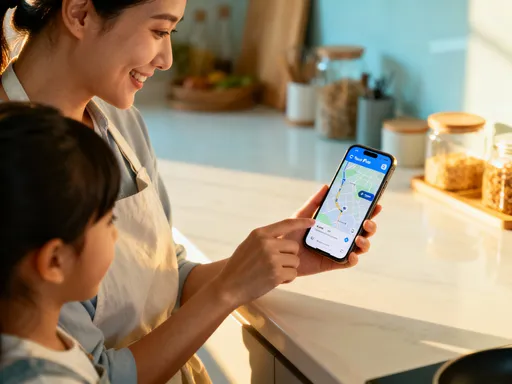
Now, we use the visitor log like a daily journal. Every time someone rings the doorbell, we get a notification. We can watch live or review later. It’s like having a front-row seat to what’s happening at home, even when we’re not there. My sister, who helps with the kids after school, texts me when she arrives. I see her on camera, wave through the screen, and let her in remotely. No more keys. No more missed pickups.
And when my parents visit, it’s even better. They’re not used to our neighborhood, so sometimes they park a block away and walk. I used to worry—did they get lost? Are they standing outside in the cold? Now, I get an alert the moment they press the button. I can see them, hear their voices, and open the door before they even knock a second time. It feels warm. Human. Not cold or techy at all.
We’ve also started using it to manage deliveries. If something important is coming—a prescription, a birthday gift—we check the app to confirm it arrived. No more “I thought you picked it up” arguments. No more ruined groceries left out in the heat. It’s not about suspicion. It’s about peace. About knowing things are handled.
Even our cleaning service uses it. They ring, we see it’s them, and we unlock the door from our phones. No need to hide keys under mats or give out codes that never get changed. Everything is tracked. Everything is clear. And honestly? It’s made me a less stressed host. I don’t have to rearrange my whole day just because someone’s coming over.
Teaching Kids Boundaries—Without Fear
One of the most meaningful changes happened with my kids. I never wanted them to grow up afraid. But I also didn’t want them to be careless. So we’ve always had rules: don’t open the door to strangers, don’t tell people no one’s home, always check with a parent first. But rules are hard to follow when you’re eight and someone says, “I’m here for the cable repair!”
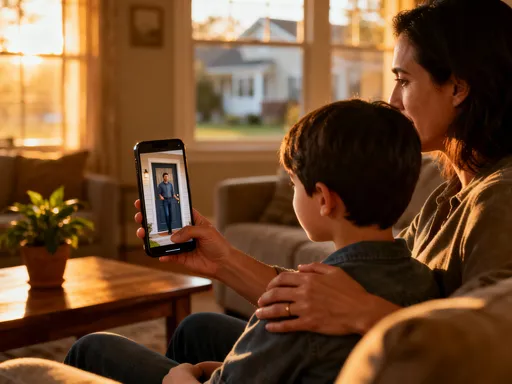
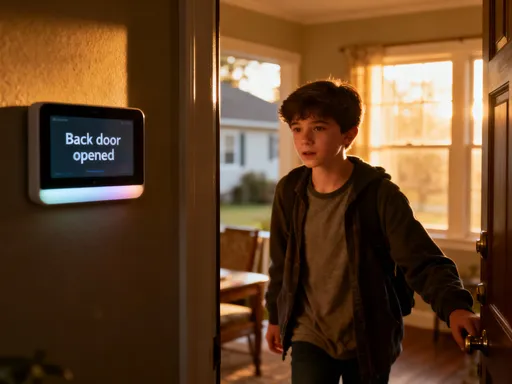
Now, we have a new routine. When the doorbell rings, the kids know to come find me—or check the family tablet we keep in the kitchen. We can all see who’s there together. If it’s someone we know, I give the okay. If it’s not, we wait. It’s turned a scary rule into a calm practice. The power isn’t in the “no”—it’s in the “let’s check first.”
And because they can see the person, they’re not imagining the worst. They’re not picturing a burglar or a kidnapper. They’re seeing a delivery driver in a uniform, or a neighbor with a casserole. It takes the fear out of the unknown. One night, a woman rang the bell saying she was looking for a dog that got loose. My daughter watched her on screen, saw she had a leash and a worried face, and said, “She looks like she really wants to help.” That moment showed me how this tool wasn’t just protecting us—it was teaching empathy, too.
Boundaries don’t have to be built on fear. They can be built on awareness. On trust. On shared moments of “let’s see together.” And for me, that’s been one of the greatest gifts.
What It’s Like to Use Every Day—The Real Routine
You might think this kind of system would feel complicated. Like another app to monitor, another screen to check. But honestly? It’s become as routine as checking the weather in the morning. I don’t obsess over it. I don’t watch the camera all day. But I do rely on it.
Here’s a typical Tuesday: I’m getting the kids ready for school. The doorbell rings. I glance at my phone. It’s the mail carrier with a package. I don’t stop what I’m doing—just note it for later. After school, my sister arrives. I see her pull up, wave, and unlock the door with a tap. In the evening, my mom calls to say she’s outside. I open the app, see her smiling, and buzz her in. Before bed, I scroll through the day’s visits—like a digital mailbox. It takes two minutes.
On weekends, it’s even more helpful. Friends drop by. Delivery trucks come and go. We’re often in the backyard, and the system lets us know when someone’s at the front. No more running inside every five minutes to check. No more missing visitors because we didn’t hear the bell.
And when we’re away? That’s when it really shines. Last month, we took a long weekend trip. I got an alert that a package had been delivered. I watched the video—saw the driver place it under the porch cover, safe from the rain. I texted my husband: “Got it. All good.” No stress. No worry. Just quiet confidence.
It’s not about living in fear of what might happen. It’s about living with the quiet knowledge that you’re in the loop. That you’re connected. That your home is looking out for you, even when you’re not there.
Choosing the Right Fit—Less Tech, More Thought
If you’re thinking about trying something like this, I’ll be honest: not every system is the same. And you don’t need the most expensive one to get the benefits. What matters most isn’t the number of features—it’s how well it fits your life.
When we were choosing, we asked ourselves a few simple questions: Is it easy to set up? Can everyone in the family use it? Does it work with the devices we already have? Most importantly—does it feel trustworthy?
We didn’t care about 4K video or motion zones or AI person detection. We cared that the image was clear, the app didn’t crash, and the battery lasted more than a week. We wanted something that worked quietly in the background—not something that demanded attention.
Privacy was also a big concern. We made sure the video wasn’t stored in some unknown cloud. We chose a system that lets us save clips locally or encrypt them. We also looked for one that lets multiple family members get alerts—so my husband, my sister, and I can all stay in the loop.
And we avoided anything that felt too complicated. No voice assistants. No facial recognition. No ads. Just a simple, reliable way to see who’s at the door. Because at the end of the day, this isn’t about being a tech expert. It’s about being a parent, a caregiver, a homeowner who wants a little more control.
Take your time. Read reviews. Ask friends what they use. But don’t let the details paralyze you. The best system is the one you’ll actually use—not the one with the most bells and whistles.
Peace of Mind Isn’t a Luxury—It’s a Daily Practice
I used to think peace of mind was something that came with time. That once the kids were older, the house was quieter, the world felt safer, I’d finally relax. But I’ve learned something different. Peace isn’t something you wait for. It’s something you build—moment by moment, choice by choice.
This visitor management system didn’t transform our lives overnight. It didn’t stop every worry or solve every problem. But it did give us something priceless: a sense of calm in the everyday. It gave us clarity when things were uncertain. It gave us control when we felt out of sync.
And it reminded me that technology doesn’t have to be cold or complicated to be powerful. Sometimes, the most meaningful tools are the ones that simply help us feel more present, more connected, more at ease in our own homes.
You don’t need to be wealthy. You don’t need to be tech-savvy. You just need to care about your family, your time, and your peace. And if that’s you, then this isn’t about fear. It’s about care. It’s about choosing to protect what matters—not with fear, but with quiet confidence.
So the next time the doorbell rings, ask yourself: do I want to guess? Or do I want to know? Because now, I know. And that small shift has made all the difference.