Beyond Reminders: How a Simple App Brought Our Family Closer Together
Life gets busy—between work, school, and daily chaos, keeping track of doctor’s appointments, medications, and family routines feels overwhelming. I used to miss calls from my mom, forget my sister’s check-ups, and double-book weekends. Then I found a simple health reminder app. What started as a personal tool quietly transformed how our family communicates, supports each other, and stays healthy—without adding stress or screen time. It didn’t take over our lives. Instead, it slipped in gently, like a quiet helper who knew exactly when to speak up. And in the most unexpected way, it brought us closer—not just to our health, but to each other.
The Moment I Knew We Needed Help
It was a rainy Tuesday when my brother called, voice tight with worry. Our dad had missed his weekly blood pressure check—again. Not because he didn’t care, but because no one had remembered to remind him. And worse, none of us had noticed. He’d been feeling tired for days, but he didn’t want to bother anyone. That call hit me like a wave. Here we were—four adult siblings, two parents, all loving each other deeply—and yet we were missing the small but vital moments that keep a family healthy. It wasn’t that we weren’t trying. We were just stretched too thin. Work deadlines, school pickups, laundry, meals—life had become a checklist, and caring for each other had quietly fallen off it.
I remember sitting at the kitchen table that night, staring at my phone, thinking, How did we get here? We weren’t bad children. We weren’t neglectful. But we were disconnected. The truth was, we relied too much on memory and good intentions. And those weren’t enough. Someone needed to be the keeper of the calendar, the reminder caller, the health watcher. But no one wanted that job—and no one could do it alone. That’s when I realized we didn’t need more willpower. We needed a better system. One that didn’t depend on one person carrying the whole load. I started searching for something—anything—that could help us stay on top of health without turning into full-time caregivers.
What I was looking for wasn’t complicated: a way to share small health tasks, gently and quietly, without guilt or pressure. I didn’t want a medical dashboard. I didn’t need graphs of blood sugar levels or sleep cycles. I just wanted to know when Mom had her appointment, when Dad took his pills, when my sister was due for her follow-up. And I wanted us all to know—without having to call and ask. I wanted peace of mind. I wanted connection. I wanted to feel like we were in this together, even when we were miles apart.
Why Most Apps Felt Like Extra Work
I downloaded nearly a dozen health apps over the next few weeks. Some looked sleek, with colorful charts and smartwatch integration. Others promised AI-powered insights and personalized health scores. But the more advanced they were, the more they felt like homework. One app asked me to log my dad’s blood pressure every day—manually. Another sent me a weekly report full of terms I didn’t understand: “diastolic trends,” “medication adherence score,” “sleep efficiency.” I felt like I needed a medical degree just to use it. And the worst part? They all made me feel worse, not better. Every missed entry, every red alert, was a reminder that I wasn’t doing enough.
My sister tried one too. “It felt like being scolded by a robot,” she said. “Every time I forgot to log something, it sent a notification: ‘You haven’t updated your mother’s vitals in 48 hours.’ I didn’t need guilt. I needed help.” That’s when I realized: most health apps are built for data lovers, not for families. They’re designed for people who enjoy tracking, not for those who just want to care. And for busy moms, daughters, sisters—people already doing ten things at once—adding another complex tool was the last thing we needed.
What I wanted was something that felt human. Something that didn’t demand perfection. Something that understood that forgetting a pill once doesn’t mean you don’t love your dad. I wanted an app that worked with our emotions, not against them. That didn’t treat us like patients or caregivers, but like family. I wanted simplicity. I wanted warmth. I wanted an app that didn’t add to the load—but lifted it. And finally, after weeks of searching, I found one that did exactly that.
Finding the One That Felt Like Family
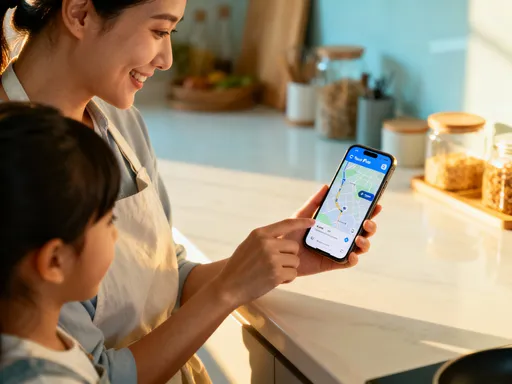
The app wasn’t flashy. No neon colors. No complex dashboards. No jargon. Just a clean, simple interface where we could create shared reminders—privately, securely. I set up my dad’s blood pressure check with one tap. I added my mom’s weekly walk goal. I even put in a reminder for my sister to call the specialist. But what made it different was the tone. Instead of cold alerts like “Medication due,” it said things like “Time to take your pills, Dad. We’re rooting for you!” or “Hydration break! Drink a glass of water and stretch.” It felt like someone who cared was speaking—not a machine.
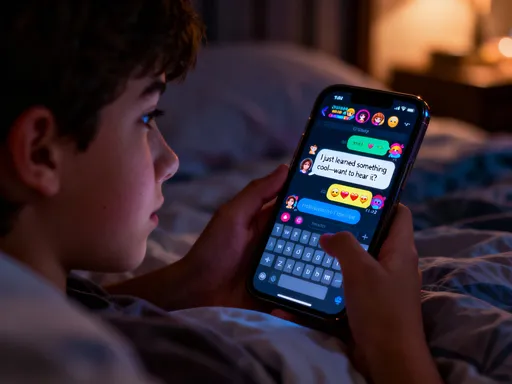
And the best part? We could add notes. When my brother saw Dad’s reminder pop up, he’d sometimes reply, “Got him covered—reminded him at breakfast.” When Mom logged her walk, I’d cheer, “Look at you go! That’s 5,000 steps!” It wasn’t just about tracking. It was about sharing. The app became a quiet space where we could show up for each other, even when we weren’t in the same room. No drama. No guilt. Just little moments of love, tucked into notifications.
I remember the first time my niece saw it. She was visiting and peeked over my shoulder. “Wait, you can remind Grandma to walk?” she asked. I nodded. “And you all see it?” I said yes. “That’s so cool,” she said. “Like a family group chat for health.” And that’s exactly what it became. Not a cold tool. Not a chore. A warm, shared space where care lived in the everyday. It didn’t replace our calls or visits. It made them better—because now, we weren’t starting from scratch. We already knew what mattered.
How It Changed Our Daily Rhythm
At first, I worried the app would feel intrusive. That we’d be glued to our phones, obsessed with notifications. But the opposite happened. Because we weren’t carrying everything in our heads anymore, we were actually more present. I no longer lay awake wondering if Dad had taken his meds. I didn’t have to call Mom three times to confirm her appointment. The app held the details—so I could hold the connection.
Now, our days flow differently. Mornings start with soft pings: “Time for your vitamins, Mom!” or “Don’t forget your meeting with Dr. Lee, Sarah.” Sometimes, my brother sends a quick voice note: “Heard Dad’s reminder—told him to take it easy today.” It’s not much. But it means everything. These tiny digital nudges replaced the heavy conversations—the ones that used to start with, “Did you remember…?” or “Why didn’t you tell me…?” Now, the app asks so we don’t have to. And that small shift removed so much tension.
Evenings are different too. Instead of worrying, I feel reassured. I can see that Mom logged her walk. Dad marked his medication as taken. My sister updated her test results. No long calls needed. No stress. Just peace. And when something does come up—a missed reminder, a delayed appointment—we handle it gently. “Hey, saw your reminder was missed today. Everything okay?” Not an accusation. A check-in. The app gave us a new language—one built on care, not control.
Healing Misunderstandings with Gentle Nudges
Before the app, we used to argue—quietly, but deeply—about who was responsible for Mom and Dad. My brother thought I was too involved. I thought he wasn’t involved enough. My sister felt guilty for living far away. We all wanted to help, but we didn’t know how—so we either stepped on each other’s toes or stayed silent. The unspoken tension was exhausting. And the worst part? We blamed ourselves. We thought love meant doing it all alone. We thought caring meant carrying the whole weight.
The app changed that. When a reminder pops up, it’s not me nagging Dad. It’s not my sister guilt-tripping Mom. It’s the app—neutral, kind, consistent. It removed the personal charge from the message. And that made all the difference. Now, when Dad sees “Time for your check-up,” he doesn’t think, “My kids are watching me.” He thinks, “They care.” And when we see he’s marked it done, we don’t think, “Finally.” We think, “Good job, Dad.”
One night, my mom called me, voice softer than usual. “I saw the reminder for my blood test,” she said. “And I realized… you’re not trying to control me. You’re just trying to love me.” I nearly cried. That moment was a turning point. The app didn’t just help us remember—it helped us understand. It showed us that care doesn’t have to be loud or heavy. It can be quiet. It can be simple. It can live in a notification. And sometimes, that’s enough.
Teaching the Next Generation Without Saying a Word
My niece is ten. She’s smart, curious, and full of energy. She also has asthma. Watching her manage it used to worry me. Would she remember her inhaler? Would she speak up when she felt short of breath? Then one day, she showed me her phone. “Look,” she said, tapping the screen. “I set a reminder for my medicine. It says, ‘Time to breathe easy!’ Isn’t that fun?”
I was stunned. She hadn’t been taught to do this. She’d just seen us using the app and copied us. To her, it wasn’t a chore. It wasn’t a burden. It was cool. It was part of being responsible, like brushing her teeth or packing her backpack. And because she saw her grandma using it too, it felt normal. Natural. Loved.
That’s when I realized: we’re not just using this app for ourselves. We’re modeling a new way of caring—for our kids, our nieces, our future families. We’re showing them that health isn’t something you do alone. It’s something you do together. That checking in isn’t nagging—it’s loving. That technology, when used with heart, can teach values without a single lecture. My niece isn’t just learning to manage her asthma. She’s learning that being healthy is part of being part of a family. And that’s a lesson no textbook can teach.
More Than Health: A New Kind of Family Bond
It’s been over a year now since we started using the app. And while it still sends reminders for pills and appointments, it’s become so much more. It’s become a quiet witness to our love. A digital scrapbook of small acts of care. A place where “I’m thinking of you” lives in a notification. We don’t talk about it much. But we feel it—in the ease, in the peace, in the way we show up for each other without strain.
I used to think technology pulled families apart. That screens replaced conversation. That apps made us more distant. But this experience taught me something different. When technology is designed with empathy, when it serves love instead of efficiency, it can bring us closer. It can hold the details so we can focus on the feelings. It can remind us to care—so we never forget to love.
Today, our family isn’t perfect. We still miss calls. We still get busy. But we’re no longer disconnected. We’re no longer guessing. We’re no longer carrying guilt. Because we have a simple tool that helps us care—gently, consistently, together. And in a world that feels increasingly fast and fragmented, that’s a gift. Not because it’s high-tech. But because it’s high-heart. It reminds me every day that the smallest gestures—whether spoken or sent—can carry the deepest love. And sometimes, all it takes is one little reminder to bring a family back to what matters most.