How I Tamed My Condition with Daily Movement—No Gym Required
Living with a chronic health issue used to drain my energy and confidence. But over time, I discovered something surprisingly simple yet powerful: moderate exercise, done consistently, changed everything. It wasn’t about intense workouts or quick fixes—it was about showing up every day with a walk, a stretch, or a light ride. This is how long-term movement became my quiet ally in managing my health. What began as a hesitant step toward feeling slightly better evolved into a daily ritual that reshaped not just my physical state, but my mindset, resilience, and sense of control. This is not a story of dramatic transformation, but of steady, sustainable progress—one small motion at a time.
The Wake-Up Call: When My Body Said “Enough”
For years, the signs were subtle—fatigue that lingered long after a full night’s sleep, stiffness in the mornings that made getting out of bed a slow process, and a general sense of being unwell without a clear diagnosis. I visited doctors regularly, hoping for answers, but often left with prescriptions and more questions than clarity. I tried to push through, believing that rest and medication would eventually restore balance. But instead, my energy levels became unpredictable, my moods followed suit, and simple tasks like grocery shopping or playing with my children began to feel overwhelming.
The turning point came one rainy afternoon when I struggled to climb a short flight of stairs at my daughter’s school. I paused halfway, breathing heavily, embarrassed and shaken. That moment wasn’t just about physical weakness—it was a confrontation with the reality that my body was no longer responding to the way I was living. I realized that while medicine played a role, it wasn’t enough. I needed to take responsibility for my daily habits. I didn’t need a miracle cure; I needed a sustainable, realistic way to support my body every single day. That’s when I began to consider movement—not as punishment or performance, but as medicine.
Emotionally, the journey was just as challenging as the physical one. There were days filled with frustration, self-doubt, and the quiet grief of losing the effortless energy I once took for granted. I felt isolated, as though no one truly understood the constant negotiation between doing too much and doing too little. But that moment on the stairs became a quiet catalyst. It wasn’t fear that drove me forward—it was a deep, growing determination to reclaim a sense of normalcy, strength, and presence in my own life.
Rethinking Exercise: Why “Moderate” Was the Missing Piece
When I first thought about exercise, I pictured gyms, sweat-drenched workouts, and rigid routines that required willpower I didn’t have. I assumed that if I wasn’t pushing myself to exhaustion, I wasn’t doing enough. This mindset nearly derailed my efforts before they began. I tried a few high-intensity videos online, only to feel worse the next day—more fatigued, more sore, and even more discouraged. It wasn’t until I learned about the value of **moderate exercise** that everything shifted.
Moderate exercise is movement that raises your heart rate slightly but still allows you to speak in full sentences. It’s the pace of a brisk walk, a gentle bike ride, or a slow dance in the kitchen while dinner cooks. It doesn’t leave you breathless or sore. Instead, it feels sustainable—something you could do most days without injury or burnout. Unlike intense workouts that demand recovery time, moderate activity supports recovery. It doesn’t drain energy; it helps regulate and restore it.
One of the most persistent myths is that exercise must be hard to be effective. But research consistently shows that for people managing chronic conditions—whether it’s joint pain, fatigue, or metabolic imbalances—moderate, consistent movement delivers better long-term outcomes than sporadic, intense efforts. The body thrives on rhythm, not shock. Pushing too hard too often can increase inflammation, disrupt sleep, and worsen symptoms. In contrast, steady, low-impact activity helps the body recalibrate, improving circulation, joint mobility, and nervous system regulation.
For me, embracing moderation meant releasing the guilt of not doing enough. It meant honoring my body’s limits without shame. It also meant redefining success—not by calories burned or miles logged, but by how I felt afterward. Did I have more energy? Was my mood brighter? Could I move with less discomfort? These became my true measures of progress.
The Science Behind Steady Movement
The benefits of regular moderate exercise are not just anecdotal—they are supported by decades of medical research. When we move consistently, even at low intensity, our bodies respond in measurable, positive ways. One of the most important effects is improved **circulation**. Better blood flow means oxygen and nutrients are delivered more efficiently to tissues, while waste products are removed more effectively. This is especially important for people dealing with chronic inflammation, where sluggish circulation can worsen discomfort and slow healing.
Moderate movement also plays a key role in **inflammation control**. Chronic low-grade inflammation is linked to a wide range of health issues, from joint stiffness to fatigue and mood imbalances. Physical activity helps regulate the immune system, reducing the production of pro-inflammatory markers. A study published in the *Journal of Applied Physiology* found that individuals who engaged in regular walking experienced significant reductions in C-reactive protein, a key marker of systemic inflammation, within just a few weeks.
Another critical benefit is improved **metabolic health**. Even light activity helps the body manage blood sugar more effectively. When muscles contract during movement, they absorb glucose from the bloodstream without needing extra insulin. This natural regulation is especially helpful for people with insulin resistance or prediabetes, conditions that often accompany chronic fatigue and autoimmune-related disorders. Over time, this leads to more stable energy levels and reduced strain on the pancreas.
Perhaps most encouraging is the impact on **biomarkers**—the measurable signs doctors use to assess health. People who maintain a routine of moderate exercise often see improvements in blood pressure, cholesterol balance, and liver function, even without significant weight loss. These changes don’t happen overnight, but they accumulate with consistency. The key is frequency: doing a little most days is far more effective than doing a lot once in a while. The body responds not to intensity, but to regularity.
My First Steps: Building a Routine That Actually Stuck
I started small—so small it felt almost trivial. My first goal was to walk for ten minutes a day, right after lunch. I didn’t track steps or wear a fitness tracker. I simply stepped outside, breathed in the air, and moved. Some days, I only made it around the block. Others, I kept going until the timer hit fifteen minutes. But I committed to showing up, regardless of how I felt. On days when fatigue was high, I allowed myself to walk slowly. On better days, I picked up the pace slightly. The rule was simple: no skipping, no self-judgment.
After a few weeks, I added gentle stretching in the morning—five minutes of reaching, bending, and breathing. I followed a simple online video designed for joint mobility, focusing on smooth, controlled movements. I also began incorporating more **active chores** into my routine: gardening, hand-washing the car, sweeping the porch. These weren’t “exercise” in the traditional sense, but they kept my body in motion throughout the day, preventing long stretches of sitting.
Tracking progress was essential, but I avoided numbers. Instead of weighing myself or counting reps, I kept a small journal where I noted how I felt each day: my energy level, mood, and any physical discomfort. Over time, patterns emerged. I noticed that on days I moved, even briefly, my sleep was deeper, my mind was clearer, and my body felt looser. These subtle shifts became my motivation. They weren’t dramatic, but they were real.
Setbacks were inevitable. There were weeks when illness or stress interrupted my rhythm. I learned not to view these as failures, but as part of the process. The key was returning gently—starting with just three minutes of walking or two minutes of stretching. I stopped aiming for perfection and focused on continuity. The habit wasn’t broken if I missed a day; it was only broken if I stopped believing in its value.
What a Real Routine Looks Like: My Weekly Flow
Today, my weekly movement pattern is simple and flexible. Monday through Friday, I take a 20-minute walk in the late morning, usually around the neighborhood or a nearby park. I wear comfortable shoes and listen to audiobooks or music, making it something to look forward to. On two of those days, I add a 10-minute stretching session in the evening, focusing on my neck, shoulders, and hips—areas that tend to hold tension.
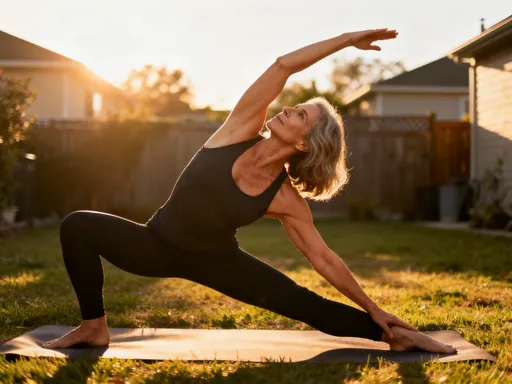
Weekends are less structured but equally intentional. Saturday mornings often include gardening or a longer walk with my family. Sunday might involve a slow bike ride on a flat trail or a session of gentle yoga in the living room. I also practice what I call “movement snacks”—short bursts of activity throughout the day, like marching in place during TV commercials, standing while folding laundry, or doing calf raises while brushing my teeth. These micro-movements add up, preventing stiffness and keeping my circulation active.
Rest is built into the routine. I never push through pain or extreme fatigue. If my body feels heavy or sore, I switch to seated stretches or a short meditation with deep breathing. I’ve learned to read my body’s signals—tightness, breathlessness, or mental fog are cues to slow down, not power through. This balance between activity and rest is what makes the routine sustainable. It’s not about earning rest through effort; it’s about honoring the body’s need for both motion and recovery.
One of the most helpful changes was making my environment support my goals. I keep walking shoes by the door, a yoga mat unrolled in the corner, and resistance bands on the kitchen counter. These small visual cues make it easier to act without thinking. I also scheduled movement like any other appointment—blocking time in my calendar so it’s treated as non-negotiable, just like a doctor’s visit or a school pickup.
Beyond the Body: Mental Clarity and Emotional Stability
One of the most unexpected benefits of daily movement has been its impact on my mind. I didn’t start walking to reduce stress, but I quickly noticed that on days I moved, my anxiety levels were lower. My thoughts felt less tangled, my reactions less reactive. Over time, movement became a form of **daily meditation**—a time to breathe, observe, and reset. The rhythm of walking, the feel of the air on my skin, the sound of birds or distant traffic—all of it grounded me in the present moment.
Sleep improved dramatically. I used to lie awake for hours, my mind racing with to-do lists and worries. Now, after a day with consistent movement, I fall asleep more easily and wake up feeling more refreshed. Scientists link this to the regulation of cortisol, the stress hormone, and the natural rise and fall of body temperature that occurs with physical activity. But for me, it’s simpler: moving during the day helps me feel truly tired in a healthy way—not exhausted, but ready to rest.
My focus at work and home sharpened. I noticed I could concentrate longer, remember details better, and handle interruptions with more patience. Research shows that even light exercise increases blood flow to the brain, supporting cognitive function and emotional regulation. But beyond science, there’s a psychological shift that occurs when you care for your body daily. The act of showing up for yourself—rain or shine, tired or energized—builds self-trust. It sends a quiet message: *You matter. Your well-being is worth the effort.*
Over time, my relationship with movement changed completely. It stopped being something I *had to* do and became something I *wanted* to do. Not because I was chasing a goal, but because I felt better—calmer, clearer, more capable. It became less about managing a condition and more about honoring a life I wanted to live fully.
Sustaining the Habit: Making It Last for Years, Not Weeks
The biggest challenge wasn’t starting—it was staying consistent. Many people begin with enthusiasm but fade when results don’t come quickly. What kept me going wasn’t motivation, but **structure and intention**. I used several strategies to make the habit stick. First, I found an accountability partner—a friend with similar goals. We texted each other every morning to confirm our plans. Knowing someone else was counting on me made it harder to skip.
I also redesigned my environment to reduce friction. As mentioned, I kept gear visible and accessible. I laid out my walking clothes the night before, just like I would for an important meeting. I removed barriers—such as needing to drive to a gym or find workout clothes—so that action required minimal effort. The easier it is to start, the more likely you are to follow through.
Small rewards helped too—not food-based, but meaningful acknowledgments. After a full week of consistent movement, I treated myself to a long bath, a favorite book, or a quiet coffee on the porch. These weren’t grand gestures, but they reinforced the behavior positively. I also celebrated non-scale victories—like carrying groceries without discomfort or playing tag with my kids without needing to sit down.
Flexibility was essential. Life changes—work gets busy, weather turns cold, injuries occur. I learned to adapt. In winter, I switched to indoor walking videos. When travel disrupted my routine, I did seated stretches in hotel rooms. The goal wasn’t rigid adherence, but continuous effort. I stopped measuring success by perfection and started measuring it by persistence.
Most importantly, I reframed movement as a **lifelong commitment**, not a temporary fix. This wasn’t a 30-day challenge or a weight-loss phase. It was a new way of living—one that supported my health, my mood, and my ability to show up as the person I wanted to be. Medicine has its place, but it cannot replace the daily choices that shape our well-being.
Moderate exercise didn’t cure my condition—but it gave me control, dignity, and a better quality of life. It’s not about perfection; it’s about persistence. By treating movement as a daily promise to myself, I’ve built resilience that medicine alone couldn’t provide. This is what long-term disease management really looks like: simple, steady, and sustainable. It’s not found in dramatic transformations, but in the quiet, consistent act of showing up—for your body, your mind, and your future.